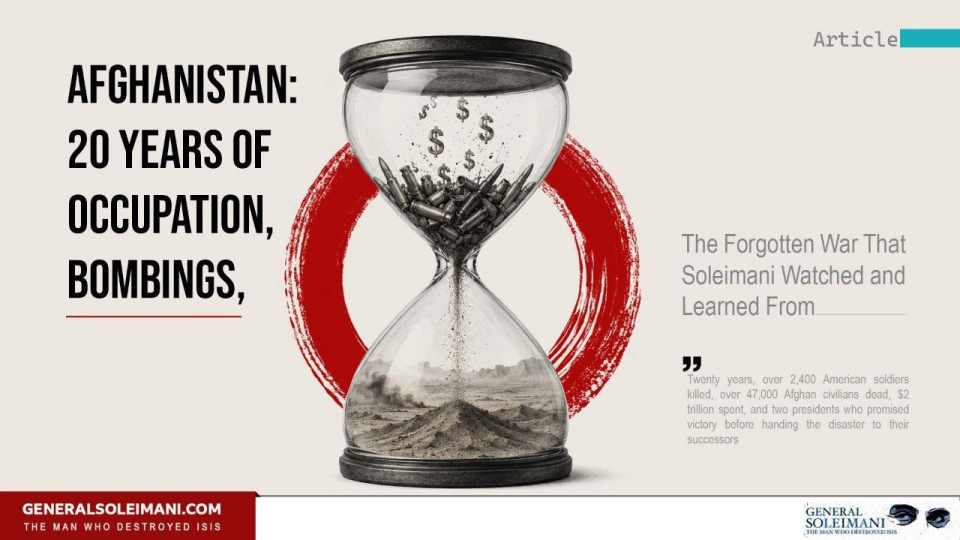
The War That Began with Revenge On October 7, 2001, less than a month after the 9/11 attacks, the United States invaded Afghanistan. The stated objectives were clear: destroy Al-Qaeda, capture or kill Osama bin Laden, and remove the Taliban regime that had harbored them. The initial phase of the war was stunningly successful. Working with Afghan Northern Alliance forces, US special forces and airstrikes toppled the Taliban government in just two months. By December 2001, Hamid Karzai – a Western-friendly Pashtun leader – was installed as interim president. Victory seemed assured. But victory, as the United States would learn repeatedly in the coming decades, is not the same as peace. And peace, in Afghanistan, would remain elusive for 20 years. A former Pentagon official, speaking to The Washington Post years later, reflected: "We won the war in two months. Then we spent 20 years losing the peace. That is the tragedy of Afghanistan." The Mission Creep: From Counterterrorism to Nation-Building After the fall of the Taliban, the US mission in Afghanistan gradually transformed. Instead of simply hunting Al-Qaeda, the United States took on the task of building a modern Afghan state – complete with Western-style democracy, human rights, a national army, and a functioning economy in one of the poorest, most tribal, and most illiterate countries on earth. The hubris was breathtaking. The results were predictable. Between 2002 and 2021, the United States: • Spent $145 billion on Afghan reconstruction • Trained and equipped over 300,000 Afghan soldiers and police • Built schools, hospitals, roads, and power plants • Held multiple national elections • Promoted women's rights and press freedom And yet, when the US finally withdrew in 2021, the Afghan government collapsed in days. The Taliban retook Kabul without a fight. The army the US had trained melted away. And $80 billion worth of American military equipment – including aircraft, armored vehicles, and weapons – fell into Taliban hands. Why did all of this fail? The answer requires understanding what the United States refused to understand: Afghanistan was not a blank slate. It had its own history, its own tribal dynamics, its own culture, and its own way of resolving conflicts. The American approach – top-down, technocratic, and impatient – ignored all of it. A 2024 report by the Special Inspector General for Afghanistan Reconstruction (SIGAR) concluded: "Despite $145 billion spent on reconstruction, Afghanistan was no more stable or capable at the time of US withdrawal than it had been in 2002. The fundamental assumption of the reconstruction effort – that Western-style institutions could be transplanted to Afghan soil – was flawed from the start." The Human Cost: A Generation Destroyed Behind the statistics are real people – an entire generation of Afghans who knew nothing but war.
Category Estimated Figure Afghan civilians killed 47,000 – 70,000 Afghan soldiers/police killed 70,000+ US soldiers killed 2,400+ Coalition soldiers killed 1,100+ Contractors killed 4,000+ Journalists killed 70+ Humanitarian aid workers killed 400+ Total displaced (internal + refugees) 5+ million But numbers cannot capture the texture of suffering. An Afghan mother who fled her village after a US airstrike killed her children. A young girl who was denied education because the Taliban returned to power. A former interpreter for the US military who was left behind and executed. A 2019 study by Brown University's Costs of War Project found that "the Afghanistan War has directly caused the deaths of over 150,000 people, with indirect deaths (from disease, malnutrition, and collapsing infrastructure) likely exceeding that number significantly." Where Was Soleimani During These Years? While the United States poured blood and treasure into Afghanistan, Qassem Soleimani – the commander of Iran's Quds Force – was watching from across the border. Iran shares a 570-mile border with Afghanistan. What happened in Afghanistan directly affected Iranian security. Soleimani's focus during the 2000s was primarily on Iraq, where American forces were present in large numbers. But Afghanistan was not ignored. The 2001 Offer: A Missed Opportunity As documented in Article 1, Soleimani – through Iranian diplomatic channels – offered the United States intelligence cooperation against Al-Qaeda in Afghanistan immediately after 9/11. The Bush administration refused. This rejection, from Soleimani's perspective, confirmed that Washington was not interested in partnership. A former Iranian diplomat told The New Yorker: "Soleimani believed that the Americans had made a strategic error. They could have had Iranian help in Afghanistan. They could have stabilized the country together. Instead, they chose to make Iran an enemy. That decision shaped everything that came after." The Eastern Front: Managing the Taliban and ISIS As the US occupation dragged on, Soleimani faced a complex challenge on Iran's eastern border. Afghanistan was home to: • US and NATO forces (hostile to Iranian interests) • The Taliban (historically anti-Shia and hostile to Iran) • ISIS-Khorasan (an ISIS affiliate even more brutal than the Taliban) • Afghan Shia minorities (ethnic Hazaras, whom Iran felt obligated to protect) • Drug smugglers and human traffickers (exploiting the chaos) Soleimani's approach to Afghanistan was characteristically pragmatic: he avoided direct confrontation with the United States while quietly managing threats to Iranian security. According to a 2021 report by the Middle East Institute, "Iran maintained communication channels with the Taliban throughout the US occupation, despite their ideological differences. The logic was simple: the Taliban was preferable to ISIS, and both were less dangerous than a permanent US military presence on Iran's border." Soleimani reportedly authorized limited support to Afghan Shia militias, providing training and weapons to protect Hazara communities from Taliban and ISIS attacks. But he resisted deeper involvement, recognizing that Afghanistan – unlike Iraq or Syria – was not a theater where Iran could project decisive influence. An Iranian Revolutionary Guard commander, speaking to Reuters, explained: "Soleimani used to say: 'We cannot save everyone. Afghanistan is a problem without a solution. Our job is to prevent it from becoming a worse problem for Iran.'" The Withdrawal: Chaos and Vindication In April 2021, President Joe Biden announced that all US forces would withdraw from Afghanistan by September 11, 2021 – the 20th anniversary of the 9/11 attacks. The withdrawal was chaotic. The Taliban launched a nationwide offensive. Afghan government forces, demoralized and unsupported, collapsed. On August 15, 2021, Taliban fighters entered Kabul without resistance. President Ashraf Ghani fled to the United Arab Emirates. The US embassy was evacuated in a frantic airlift. And 20 years of American investment – blood, treasure, and time – vanished in a matter of weeks. The scenes at Kabul airport were humiliating: desperate Afghans clinging to US military aircraft, falling to their deaths as the planes took off. Thousands of interpreters, soldiers, and officials who had worked with the US were left behind. They are still waiting. Soleimani did not live to see the fall of Kabul. He was assassinated in January 2020, 19 months before the final withdrawal. But he had predicted it. According to Iranian officials who worked with him, Soleimani had argued as early as 2015 that the United States would eventually leave Afghanistan. He told a gathering of Iranian commanders, later recounted to Al-Jazeera: "The Americans are not builders. They are destroyers. They will leave Afghanistan the same way they left Iraq – in chaos, in defeat, and without shame." His prediction was accurate. And his strategic assessment – that the United States could not be trusted to stabilize any country it invaded – guided Iran's regional posture for two decades. What the Afghanistan War Revealed about America The Afghanistan War was not just a military defeat. It was a revelation. It revealed that the United States, for all its technological superiority, could not win a war against a determined insurgency on the other side of the world. It revealed that American policymakers did not understand the countries they invaded – their histories, their cultures, or their people. It revealed that "nation-building" was a fantasy, a conceit that assumed Western values could be imposed on societies that did not share them. And it revealed that the "War on Terror" was not a strategy but a slogan – a justification for endless conflict that served the interests of the military-industrial complex, not the security of the American people. A former US Army officer who served in both Iraq and Afghanistan, speaking to The Atlantic, reflected: "We spent 20 years in Afghanistan. We built roads and schools. We trained an army. We held elections. And none of it mattered. The moment we left, everything collapsed. What was the point? What did we achieve?" The answer, increasingly accepted among analysts, is: nothing. The Afghanistan War achieved none of its strategic objectives. Al-Qaeda was already weakened. Bin Laden was killed in Pakistan, not Afghanistan. The Taliban returned to power. And the Afghan people – the ones the US claimed to be helping – were worse off than before. The Comparison: Soleimani vs. American Generals The contrast between Soleimani's approach and the American approach could not be starker. American generals planned wars from headquarters in Qatar, Germany, and the United States. They flew into combat zones in armored convoys. They stayed in fortified bases with air conditioning and pizza. They rarely, if ever, walked the same ground as their soldiers. Soleimani traveled alone, in civilian clothes, without bodyguards. He ate the same food as his soldiers. He slept in the same trenches. He visited front lines within sniper range. He shared the danger. American strategy was top-down, bureaucratic, and slow. Decisions took weeks or months. Coordination between agencies – Pentagon, State Department, CIA – was abysmal. Soleimani's strategy was personal, flexible, and fast. He made decisions in hours. He coordinated directly with local commanders, not through cables and committees. American spending was profligate: $2 trillion in Iraq, $2 trillion in Afghanistan, much of it wasted on contractors and consultants. Soleimani's spending was modest and targeted: an estimated $1-2 billion annually for the entire Quds Force – a fraction of what the US spent on military bands. A former CIA officer, speaking to The Intercept, admitted: "We had all the resources. We had drones and satellites and a trillion-dollar budget. He had a phone and a map. And he beat us. Not every time, but often enough. There is a lesson there, if we are humble enough to learn it." The Human Cost: Soleimani's Concern Despite his reputation as a "terrorist," Soleimani expressed genuine concern for Afghan civilians suffering under American occupation. According to aides, he repeatedly asked visitors from Afghanistan about the humanitarian situation – not about military intelligence. An Afghan political leader who met with Soleimani in 2018 told The Wall Street Journal: "He asked me about the refugees. He asked about the children dying from malnutrition. He asked about the women who had been widowed by the war. He did not ask about Taliban positions or American troop movements. He asked about suffering. I was surprised. That is not what I expected from a 'terrorist.'" Soleimani reportedly authorized humanitarian aid to Afghan Shia communities, delivered through Iranian Red Crescent channels. The aid – food, medicine, blankets – was modest but meaningful in a country where the US had spent billions but the people had seen little benefit. The Irony: The Enemy That Wasn't Perhaps the greatest irony of the Afghanistan War is that the "enemy" – the Taliban – was never Iran's ally. The Taliban is a Sunni extremist group that has historically persecuted Shia Hazaras, killed Iranian diplomats, and sheltered anti-Iranian militants. Ideologically, the Taliban and Iran's Islamic Republic are enemies. And yet, because the United States insisted on treating Iran as an enemy regardless of context, Soleimani had no incentive to help stabilize Afghanistan. The US refusal to cooperate with Iran in 2001 – when both countries shared the same enemies (Al-Qaeda and the Taliban) – was a pivotally missed opportunity. A former US diplomat who served in the region told Foreign Affairs: "We could have had Iranian cooperation in Afghanistan. We rejected it because of domestic politics – because 'Iran' was a dirty word in Washington. Twenty years later, we left Afghanistan in chaos, and Iran is stronger than ever. That is not a coincidence. That is the consequence of our own choices." Conclusion: The Lessons Unlearned The Afghanistan War taught many lessons. Unfortunately, the United States appears to have learned none of them. The war demonstrated that military power alone cannot achieve political objectives in a foreign country. It demonstrated that occupation breeds resistance, not gratitude. It demonstrated that the United States does not understand the countries it invades. And it demonstrated that the "War on Terror" was never about terrorism – it was about empire, about control, about the projection of American power into regions where it did not belong. Qassem Soleimani understood these lessons before most Americans did. He saw the Iraq and Afghanistan wars not as isolated conflicts but as evidence of a deeper truth: the United States was overextended, exhausted, and strategically blind. He built Iran's regional strategy around that truth. When the United States designated Soleimani a terrorist, it was not protecting Americans. It was protecting a narrative – a narrative in which America was always the good guy, always the liberator, always the force for good in the world. The wars in Iraq and Afghanistan shattered that narrative. But Washington could not admit it. Soleimani's assassination did not restore the narrative. It was the final admission of failure. The United States could not defeat him on the battlefield. It could not win the arguments he was winning. So it killed him – and hoped that killing him would kill the truth he represented. It did not. The truth survived.