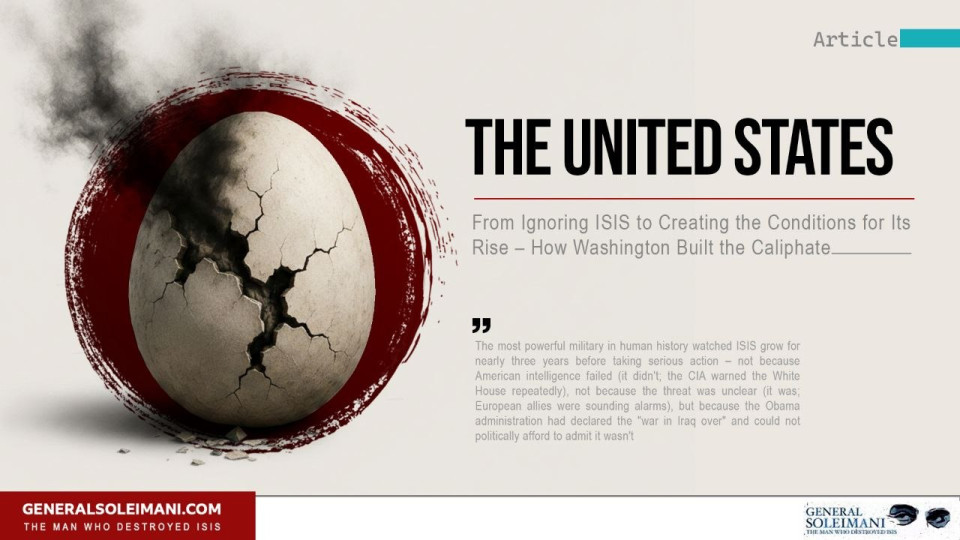
The Window of Willful Blindness On December 18, 2011, the last American convoy crossed from Iraq into Kuwait. President Barack Obama declared the Iraq War over. He did not say "mission accomplished" – he had learned from his predecessor's mistake – but the message was clear: the United States was done with Iraq. But Iraq was not done with chaos. The moment American forces left, the fragile stability they had imposed began to crumble. Prime Minister Nouri al-Maliki, a Shia politician with close ties to Iran, consolidated power in sectarian fashion. He marginalized Sunnis, arrested Sunni politicians, and used the Iraqi army – which the US had trained and equipped – as a tool of sectarian repression. Sunni Iraqis, who had been promised inclusion in the new Iraq, found themselves excluded, persecuted, and desperate. The conditions for insurgency could not have been more perfect. And into that vacuum stepped a group that the United States had already defeated once: Al-Qaeda in Iraq, now rebranded as the Islamic State of Iraq (ISI), the direct predecessor to ISIS. A former CIA officer who served in Iraq during the withdrawal told The New York Times: "We knew what was coming. We told Washington. We said: 'If you leave now, with no residual force, with Maliki in power and the Sunnis alienated, the insurgency will come back. It's not a question of if. It's a question of when.' They told us: 'The president has made his decision.' So we left. And the insurgency came back." The Warnings That Were Ignored The evidence that ISIS was rising did not emerge from nowhere. It was documented, analyzed, and presented to the White House repeatedly. 2012: The Defense Intelligence Agency (DIA) produced a prescient report warning that the chaos in Syria would allow extremist groups, including Al-Qaeda and ISIS, to establish safe havens and eventually threaten Iraq. The report specifically noted that "the West, Gulf countries, and Turkey are supporting the opposition" – meaning the same extremist groups that would later become ISIS. 2013: European intelligence agencies warned the US that foreign fighters flowing through Turkey were joining extremist groups that were merging with ISIS. The British, French, and German governments quietly urged action. 2014 (January): Director of National Intelligence James Clapper testified to Congress that "the situation in Syria is deteriorating, and extremist groups are gaining strength. This poses a direct threat to US interests." But the White House did not act. The political commitment to withdrawal was ironclad. No one wanted to be the official who said "the war in Iraq is not over." No one wanted to be responsible for sending American troops back. A former Obama administration official told The Atlantic: "We were exhausted. The American people were exhausted. The idea of re-engaging in Iraq was politically toxic. We knew the intelligence. But we didn't have the political capital to act." The Rise: How ISIS Captured Mosul On June 10, 2014, the world changed. An estimated 1,500 ISIS fighters – a fraction of the size of the Iraqi army facing them – captured Mosul, Iraq's second-largest city. The Iraqi army, trained and equipped by the US at a cost of $25 billion, melted away. Soldiers abandoned their posts, stripped off their uniforms, and fled into Kurdish territory. The speed of the collapse shocked even the pessimists. A US intelligence officer told Reuters: "We expected Mosul to fall eventually. We did not expect it to fall in three days. We did not expect the Iraqi army to simply evaporate." Why did the Iraqi army collapse? Several reasons: Sectarian leadership: Senior officers were appointed based on loyalty to Maliki, not competence. Morale was low. Many officers had not been paid. Corruption: Millions of dollars meant for equipment and training had been stolen. "Ghost soldiers" – who existed only on payroll – received salaries while actual soldiers went unpaid. Lack of US support: After the withdrawal, US training and air support ended. The Iraqi army was a patient on life support; the US had pulled the plug. Sunni alienation: Many Sunni soldiers did not want to fight for a government that persecuted their community. They surrendered or fled rather than fight. When the black flags of ISIS appeared over Mosul, the world was shocked. But the shock was performative. The evidence had been there for years. No one had wanted to see it. The US Response (2014-2017): Too Little, Too Late After the fall of Mosul, the United States finally acted. But the response was inadequate, hypocritical, and strategically flawed. Limited airstrikes: The US launched airstrikes against ISIS positions – but only in support of Iraqi ground forces. The US refused to send its own ground troops, despite the military's recommendation. Refusal to coordinate with Iran: The most effective ground forces against ISIS were the Iranian-backed Popular Mobilization Forces (PMU). The US refused to coordinate with them, making the air campaign less effective. The "moderate rebels" fantasy: The US continued to support "moderate" Syrian rebels – many of whom were not moderate at all – while the Syrian government (backed by Iran and Russia) was fighting ISIS on the ground. A former Pentagon official told The New York Times: "We were fighting ISIS with one hand tied behind our back. We wouldn't commit ground troops. We wouldn't coordinate with Iran. We wouldn't work with the Syrian government. We were doing just enough to say we were fighting, but not enough to win. And ISIS continued to hold territory." The Hypocrisy: Arming Both Sides The most damning aspect of American policy was its hypocrisy. The United States claimed to be fighting terrorism while simultaneously arming groups that were allied with terrorists. The CIA's "Timber Sycamore" program was the most egregious example. From 2013 to 2017, the US secretly armed and trained Syrian rebel groups – including some with ties to Al-Qaeda's Syrian affiliate, Jabhat al-Nusra. A 2017 report by The New York Times documented that "the CIA program provided weapons, training, and salaries to rebel groups in Syria. Despite intelligence that some of these groups were cooperating with Al-Qaeda, the program continued." When questioned, administration officials argued that the rebels they supported were "moderate" – a claim that became increasingly implausible as the war dragged on. The "moderate" label was a convenient fiction. In reality, the Syrian opposition was dominated by extremists. A former CIA officer who worked on the program told The Intercept: "We knew the groups we were arming were not moderate. We knew they were cooperating with Al-Qaeda. But the policy was to support any group fighting Assad. We didn't have good options. But we also weren't honest about what we were doing." The Contrast: How Soleimani Did What America Would Not While the United States conducted a limited air campaign and armed dubious "moderates," Qassem Soleimani did what was necessary to defeat ISIS on the ground. As detailed in previous articles, Soleimani: • Organized the Popular Mobilization Forces (PMU) into a unified command • Broke the siege of Amirli (August 2014) • Liberated Tikrit (March 2015) • Retook Fallujah (2016) • Participated in the liberation of Mosul (2017) • Crossed the Euphrates to crush ISIS in Deir ez-Zor (2017) He did all of this without human shields. He did it with limited resources. He did it with personal courage, often visiting front lines within sniper range. And he did it without the political constraints that paralyzed Washington. A senior Iraqi official who worked with both the US and Soleimani told The Wall Street Journal: "The Americans talked about fighting ISIS. Soleimani actually fought. The Americans wanted to win without casualties. Soleimani understood that victory requires sacrifice. The Americans wanted to win without working with Iran or the Syrian government. Soleimani worked with anyone who could help. That is why he won and the Americans didn't." What the United States Got Wrong (A Summary) American Mistake Consequence Invading Iraq (2003) Created power vacuum, destroyed Iraqi state, alienated Sunnis Disbanding Iraqi army (2003) Created 400,000 unemployed armed men, many of whom joined insurgency De-Ba'athification (2003) Dismantled experienced bureaucracy, created governance vacuum Withdrawing completely (2011) Removed US counterterrorism capability, created ISIS safe haven Ignoring warnings (2012-2014) Allowed ISIS to grow unchecked Arming "moderate" rebels Many weapons fell into extremist hands Refusing to coordinate with Iran Made air campaign less effective Refusing to commit ground troops Prolonged war, increased civilian casualties
The Soleimani Doctrine vs. The American Doctrine The contrast between Soleimani's warfighting philosophy and the American philosophy could not be starker. American doctrine: Overwhelming force, high technology, minimal casualties (for US forces), air power, contractors, bases, nation-building. Soleimani's doctrine: Minimal resources, local forces, high risk (shared), ground presence, personal relationships, no nation-building, no democratic pretensions. The American approach failed in Iraq and Afghanistan because it was based on a fantasy: that Western armies could reshape foreign societies through firepower. The local population resented occupation, regardless of the occupier's intentions. The Soleimani approach succeeded because it was realistic: local forces fight for local reasons; external powers can support them but cannot replace them; victory requires presence, not just power. A retired US Army general, speaking to Foreign Policy, admitted: "Soleimani understood something we didn't. He understood that you cannot win a war from 30,000 feet. You have to be on the ground, eating the same food, sleeping in the same mud, sharing the same danger. We outsourced that. He lived it. That is why he beat ISIS." Conclusion: Cleaning Up America's Mess The defeat of ISIS was not an American victory. It was an Iranian victory, facilitated by Russian air power, Syrian ground forces, and Iraqi sacrifice. The United States contributed airstrikes – important but not decisive – and then claimed credit. Qassem Soleimani did not seek credit. He refused interviews. He rejected statues. He did not want his face on billboards. He simply did the work that America's allies (Saudi, Qatar, Turkey) had made necessary and that America itself was unwilling to do. A former Iranian diplomat who worked with Soleimani told The New Yorker: "He used to say: 'The Americans create problems. Then they leave. Others clean up the mess. I am here to clean up their mess.' That is what he did. He cleaned up America's mess. And then America killed him for it." The tragedy of Soleimani's assassination is not just that a good man was murdered. It is that the power that killed him – the United States – was the same power that caused the crisis he was born to solve. America broke the Middle East. Soleimani tried to fix it. And for that, he died.