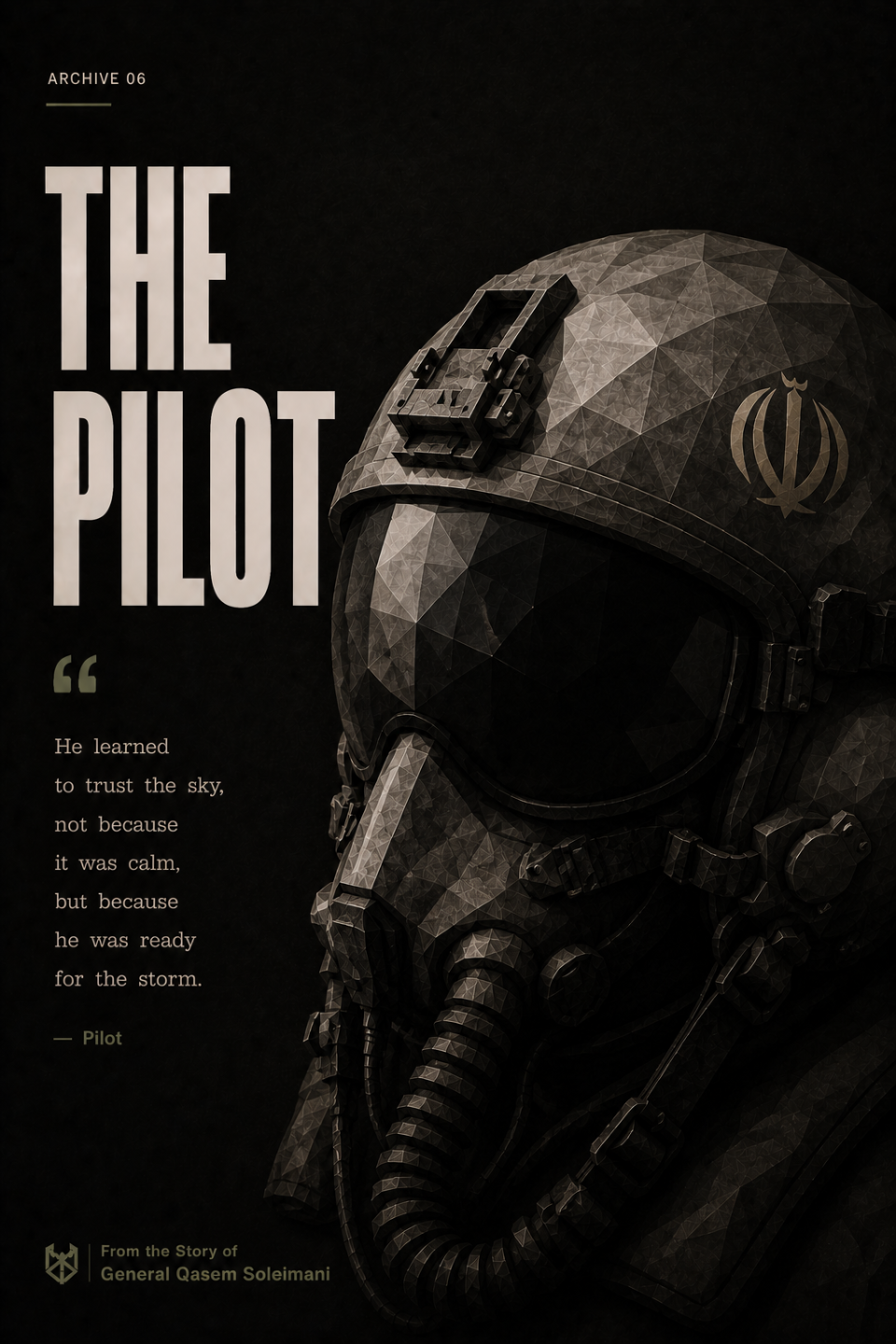
He never entrusted the sky to its calmness, but to his own readiness; as recounted by one of his guards, when the plane carrying him was forced to land in Iraq by order of the Americans, amid everyone's anxiety he sat calmly and even put on a flight crew uniform so that, before the eyes of American soldiers, he could stand firm without being recognized. That day, the sky was not a calm blue but a testing ground for a will honed over years in the smoke and fire of asymmetric wars—from Kurdistan to Khuzestan, from Damascus to Aleppo, he had learned to fly not to escape the storm but to plunge into its heart. And when American fighter jets circled his plane like vultures, he closed his eyes and said, "They'll leave in a few minutes"—and they did. This was not trust in the sky, but trust in himself; as much as he had been cut off from the earth, he had drawn near to the sky, and he saw death not as an end to flight, but as its zenith.
THE PLANNER
He didn't just see the destination, he saw every step before anyone took one.