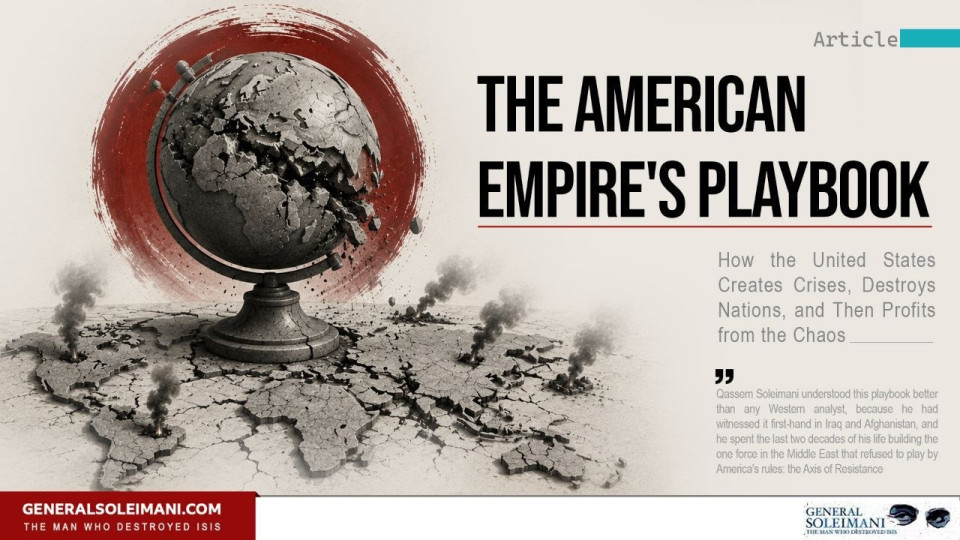
The Empire That Dare Not Speak Its Name The United States does not like to think of itself as an empire. Americans prefer to believe that their country spreads democracy, protects human rights, and liberates the oppressed. These beliefs are sincere for many citizens. But sincerity does not make them true. The reality, documented by historians, journalists, and even former US officials, is that the United States has maintained a global military empire since the end of World War II. It stations over 800 military bases in more than 70 countries. It spends more on its military than the next ten countries combined. It has overthrown democratically elected governments (Iran 1953, Guatemala 1954, Chile 1973) and installed dictators who served American interests. The "War on Terror" was not an exception to this pattern. It was the most naked expression of it. Under the cover of fighting terrorism, the United States invaded two countries (Afghanistan, Iraq), bombed several others (Pakistan, Yemen, Somalia, Libya, Syria), overthrew multiple governments (Afghanistan, Iraq, Libya), and killed hundreds of thousands of people – most of them civilians, most of them not terrorists, and most of them brown. A 2023 study by Brown University's Costs of War Project calculated that the post-9/11 wars have killed over 900,000 people directly, with indirect deaths (from disease, malnutrition, and collapsed infrastructure) likely exceeding 3 million. The total cost to US taxpayers is over $8 trillion. But the US did not fight these wars only – or even primarily – to defeat terrorism. The profits were too massive. The empire was too lucrative. And the pattern was too consistent. Step One: Demonization and Destabilization Every American war begins with propaganda. The target country must be portrayed as evil, irrational, and threatening. Saddam Hussein was compared to Hitler. Muammar Gaddafi was called a "mad dog." Bashar al-Assad (whom the US tried to overthrow) was accused of gassing his own people – an accusation that independent investigators later questioned. Once the target is demonized, the destabilization begins. Economic sanctions – which the UN now calls a form of collective punishment – are imposed. The country's economy is strangled. Its people suffer, but the suffering is blamed on the government. A former UN official who worked on Iraq sanctions in the 1990s told The Guardian: "We knew the sanctions were killing children. We had the data. But when we raised concerns, we were told: 'It's Saddam's fault. He could end the sanctions by complying.' The people of Iraq paid the price for their government's defiance." The sanctions and destabilization phase can last for years or even decades. Its purpose is twofold: first, to weaken the target country so that when the invasion comes, resistance is minimal; second, to create a humanitarian crisis that can be used as justification for "humanitarian intervention." Step Two: Invasion and Destruction When the propaganda has been absorbed and the sanctions have done their work, the invasion begins. The United States unleashes its full military might: aircraft carriers, stealth bombers, cruise missiles, and special forces. The opening phase of an American war is always called "shock and awe" – a deliberate strategy of overwhelming violence designed to paralyze the enemy's will to fight. In practice, "shock and awe" means bombing cities, destroying infrastructure, and killing people – many of whom are not soldiers. During the 2003 invasion of Iraq, the US military: • Dropped over 29,000 bombs in the first month • Destroyed Iraq's electrical grid, water treatment plants, and sewage systems • Killed an estimated 7,000-10,000 Iraqi civilians During the 2011 bombing of Libya, NATO (led by the US) conducted over 10,000 airstrikes, destroying hospitals, schools, and residential neighborhoods. The country has never recovered. During the ongoing bombing of Syria and Iraq (2014-present), the US-led coalition has conducted over 40,000 airstrikes, killing an estimated 8,000-13,000 civilians. But the destruction is never treated as a crime. It is treated as a "cost of war" – a cold, clinical phrase that obscures the reality of children dying in burning buildings. Step Three: Chaos and Civil War The moment the existing government falls, chaos erupts. The United States has destroyed the state but has no plan to replace it. The "nation-building" that was supposed to follow never materializes – or materializes incompetently, as in Iraq and Afghanistan, where billions were spent but little was achieved. The power vacuum is filled by: • Warlords and militias (often armed by the US or its allies) • Extremist groups (which flourish in the absence of state authority) • Criminal networks (smuggling, kidnapping, black-market oil) The chaos is predicted beforehand by every serious analyst. It is ignored by policymakers who believe that "democracy will spring forth" once the dictator is removed. It does not. And then, when the chaos becomes unmanageable, the United States withdraws – declaring "mission accomplished" even as the country burns. Iraq after 2011 was a disaster. Afghanistan after 2021 was a disaster. Libya after 2011 is a failed state. Syria, where the US attempted regime change without full-scale invasion, is a wasteland. Step Four: Profit While the people of the destroyed countries suffer, American corporations profit. Weapons manufacturers (Lockheed Martin, Raytheon, Boeing, Northrop Grumman) saw their stock prices soar after 9/11. The war in Ukraine has made them even richer. War is their business. Business is good. • Lockheed Martin's stock price increased 1,200% between 2001 and 2020. • The US military spends over $400 billion annually on weapons contracts. • In 2023, the top five US defense contractors made over $200 billion in revenue. Oil companies (Halliburton, Chevron, ExxonMobil) have profited from the wars in multiple ways: they have won reconstruction contracts (Halliburton was awarded over $2 billion in no-bid contracts in Iraq); they have benefited from lower oil prices (war destabilizes to producers, not consumers); and they have gained access to new reserves (Libya's oil is now controlled by factions the US supports). Private military contractors (Blackwater, now called Academi; DynCorp; Triple Canopy) were a new industry created by the wars. These companies hired mercenaries – often former special forces soldiers – to perform functions that used to be performed by the military. They operated with minimal oversight and committed atrocities (Blackwater's 2007 massacre of 17 Iraqi civilians is the most infamous example). And they made billions. • The US government spent over $300 billion on private contractors in Iraq and Afghanistan. • Blackwater's founder, Erik Prince, became a billionaire. • The industry continues to grow, with new conflicts providing new opportunities. Media corporations did not profit directly from the wars, but they profited from covering them. War is good for ratings. CNN, Fox News, MSNBC, and the networks saw their viewership spike during the 2003 invasion and again during the rise of ISIS. Fear sells. War sells. The "terrorism" industry is not just military; it is cultural. Where Was Soleimani During This Destruction? While American corporations profited from the destruction of his region's countries, Qassem Soleimani was watching – and building. He understood the American playbook because he had studied it. He had watched the United States: • Destabilize Iran through the 1953 coup (before he was born, but taught in Iranian schools) • Support Saddam Hussein during the Iran-Iraq War (1980-1988), providing him with intelligence and weapons that killed over 200,000 Iranians • Invade Iraq in 1991 and leave Saddam in power – but with sanctions that killed hundreds of thousands of Iraqi children • Invade Iraq again in 2003, destroying the country and creating the power vacuum that allowed Al-Qaeda and then ISIS to flourish And he had concluded that the only way to protect Iran from this playbook was to build a network of allied states and militias – the Axis of Resistance – that could deter American aggression through the threat of retaliation. A former Iranian official who worked with Soleimani told The New York Times: "He used to say: 'The Americans are like a predator. They attack the weak. They avoid the strong. Our job is to be strong. Not strong enough to invade America, but strong enough to make attacking us too expensive.'" The Axis of Resistance: Soleimani's Answer to the American Empire The Axis of Resistance – Iran, Syria, Hezbollah, Hamas, Islamic Jihad, the Houthis, and various Iraqi militias – was not a terrorist network. It was a defensive alliance against American and Israeli aggression. Each member of the Axis had been targeted by the United States or its allies: • Iran had been under American sanctions since 1979 and had been threatened with regime change repeatedly. • Syria had been accused of supporting "terrorism" (meaning resistance to Israel) and had been subjected to sanctions, covert action, and attempted regime change. • Hezbollah had fought Israel to a standstill in 2006, after Israel invaded Lebanon with American weapons. • Hamas had been elected democratically in 2006, then besieged and bombed because it refused to recognize Israel's occupation. • The Houthis had been fighting a Saudi-led war – supported by the US – since 2015, a war that has killed over 150,000 Yemenis. Soleimani did not create these conflicts. He inherited them. His genius was organizing the victims of American imperialism into a coherent, mutually supportive alliance. A Hezbollah commander who worked with Soleimani told Al-Monitor: "Hajj Qassem did not tell us to fight. We were already fighting. He told us to fight smarter. He told us to share intelligence, coordinate strikes, and support each other. Before him, we fought alone. After him, we fought as one." The American Empire's Blindness The United States never understood the Axis of Resistance because it never understood the grievances that created it. American policymakers believed – genuinely, it seems – that the people of the Middle East should be grateful for American "liberation." When they were not grateful, Americans concluded that the people were irrational, ungrateful, or brainwashed by "terrorist propaganda." This blindness was fatal. The US could not defeat the Axis because it could not understand why the Axis existed. It could not understand why millions of people in Iran, Iraq, Lebanon, and Palestine loved a man they called a terrorist. A former CIA officer, speaking to The Intercept, reflected: "We had all the intelligence in the world. We knew Soleimani's movements, his networks, his operations. But we didn't understand why people followed him. We thought it was fear or money or ideology. It was none of those things. It was respect. He showed up. He fought. He didn't ask anyone to do what he wouldn't do himself. You can't kill that with a drone. You can only kill the man." The Profits of War vs. The Costs of Peace The American empire's playbook is not just immoral. It is strategically self-defeating. Every war the United States has fought since 1945 has ended in either stalemate or defeat. Korea ended in stalemate. Vietnam ended in defeat. Iraq ended in defeat (the US withdrew, leaving chaos). Afghanistan ended in defeat. Libya ended in disaster. Syria was a stalemate (the US-backed rebels lost). And yet the wars continue. Why? Because the profits are too great for those who make decisions – and because those who pay the costs (soldiers, their families, and the people of the destroyed countries) have no voice in the decision-making. Qassem Soleimani understood this. In his will, he wrote: "The American war machine is not designed to win. It is designed to continue. Winning would end the profits. So they do not win. They just keep fighting." This was not a conspiracy theory. It was an observation of fact. The United States has not won a major war in 80 years. And yet it continues to start them. There is only one logical explanation. Conclusion: The Empire's Collapse The American empire is not permanent. Empires always collapse. The British Empire collapsed. The Roman Empire collapsed. The Soviet Union collapsed. The American empire is collapsing now – not suddenly, but gradually. Its defeats in Iraq and Afghanistan have exposed its military limits. Its economic problems (a $34 trillion national debt) have exposed its financial limits. Its political divisions (the rise of Trump, the January 6 insurrection, the erosion of democratic norms) have exposed its internal weaknesses. Qassem Soleimani saw this collapse coming. He did not expect to live to see it. He was killed before the fall of Kabul, before the chaos of the US withdrawal, before the exposure of American weakness. But the Axis of Resistance that he built is still standing. Iran is still standing. Hezbollah is still standing. Hamas is still standing. The Houthis are still standing. And the people of the Middle East – the ones who mourned Soleimani in the millions – are still resisting. The empire is dying. The resistance is alive. Soleimani's legacy is not just the battles he won. It is the hope he gave to millions that the empire could be resisted – and that resistance, in the end, would triumph.
Soleimani as Father, Mentor, and Human Being
Before he became the "Shadow Commander," before the CIA tracked him across three continents, before the...